Hydrogen water that survives the can.
CPG · Functional beverage
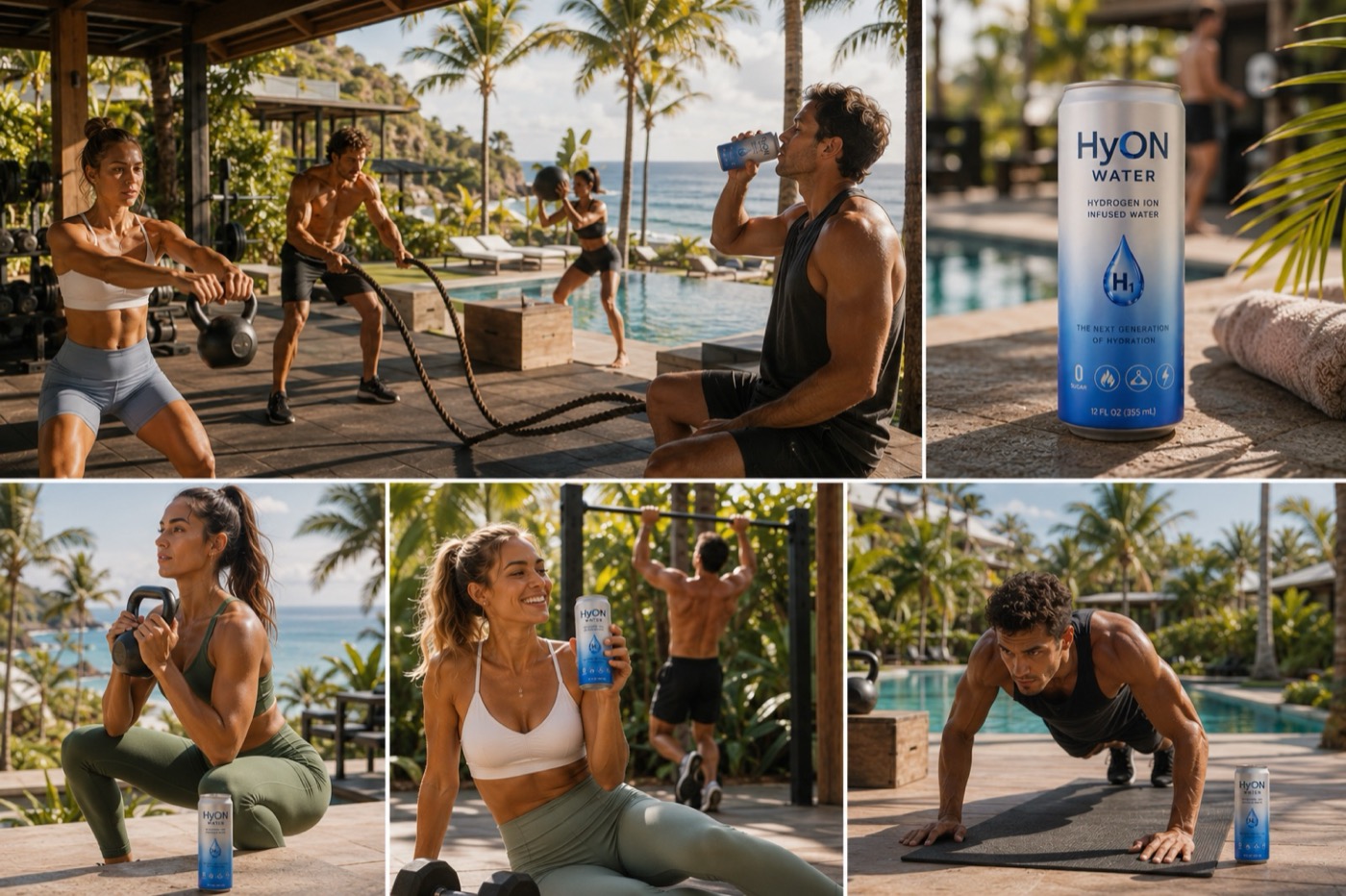
Hydrogen water's problem has always been packaging: the molecule escapes almost everything you put it in, which is why the category lives in pouches and foil sachets. Hyon Holdings' first product, HyON, uses a proprietary hydrogen-ion infusion that holds in a sleek aluminium can — still water, zero sugar, five flavours, made in the USA.
- Brand site
- hyonwater.com ↗
- First product
- HyON — 12 fl oz sleek can · still · 0 g sugar
- Stage
- Co-packer selection ahead of an 8,000-can pilot
- MTHR role
- Operating partner — brand, site and sourcing
Why it exists
Molecular hydrogen is one of the few functional ingredients with a genuine research trail behind it, and the category is still tiny — because it's a nightmare to package. Hydrogen diffuses straight out of PET, so the shelf presence has been pouches, sachets and tablets: products that feel like supplements, not drinks.
Solve the container and you unlock the category. A can that behaves like a normal beverage — chilled in a cooler, sold in a gym, stacked on a shelf — is the difference between a supplement aisle product and an actual drink brand.
Hyon Holdings is the company; the canned water is the first line under it, with a premium still-water range in glass planned behind it. The infusion process is the asset — the flavours are how it gets to market.
The product
| Format | Sleek aluminium can, 12 fl oz (355 mL) |
|---|---|
| Carbonation | None — still water |
| Sugar | 0 g |
| Target pH | Approximately 4.0 |
| Process | Proprietary hydrogen-ion infusion; full technical detail shared under NDA |
| Launch flavours | Coconut Wave · Pineapple Breeze · Mango Paradiso · Watermelon Burst · Berry Rush |
| Made in | USA |
| Planned line extension | A premium still-water range in glass |
No gas infusion at the point of sale. No pouches. A can.
Where it is now
- DoneBrand and product line defined Five launch flavours, can format, full specification and the premium glass extension mapped out.
- DoneManufacturing package written An outbound co-packer RFP covering product, volumes, requirements and pricing format, and an internal evaluation rubric that scores candidates and auto-fails anyone below a three on process capability.
- DoneBrand site shipped The marketing site — science, flavours, comparison against ordinary hydrogen water, and the partner and contact flow — is built and ready to go live.
- In progressCo-packer RFP Out to contract manufacturers, with an internal scoring rubric weighted hardest on the one thing most of them can't do: run the infusion process itself.
- NextThe 8,000-can pilot run First production run once a co-packer clears the process, still-can stability and acidified-product requirements.
The three questions every co-packer gets asked
Most candidates fail at least one, so the qualification is deliberately blunt. One: can you run or accommodate the hydrogen-ion infusion — integrate our equipment, let us install a dedicated line, or an equivalent you can support. Two: can you fill non-carbonated water in sleek cans and hold can integrity and shelf stability — nitrogen dosing plus hot-fill, tunnel pasteurisation or aseptic. Three: are you ready for an acidified product at roughly pH 4, with an established Process Authority relationship and the FDA filings on record.
Failing the first is disqualifying no matter how good the rest looks. Past that we're asking for food-safety certification (SQF, BRCGS or FSSC 22000), can sourcing and printed-can minimums, validated shelf life and how it's validated, whether bench or pilot samples come before a full run, and all-in landed cost per can broken out by tolling fee, ingredients, cans and ends, changeover, QA and one-time tooling. Technical detail moves only after a mutual NDA — the formula, the process and the batch records stay with Hyon.